Focus on Cancer RSS Feed 2014-06-18 10:00:00

What would happen if we all came together on one day to make an incredible show of support for our loved ones who have been touched by cancer? Let’s find out!

Epic Impact Day is today. One day with one very realistic goal: helping every rider in the Philadelphia Ride to Conquer Cancer® get at least one donation.

Get involved here.

Ride to Conquer Cancer Penn

Epic Impact Day Chat

To help every rider raise as much as they can for Epic Impact Day, the Philadelphia Ride to Conquer Cancer will host a social media fundraising chat today at 12 pm EST. Join us, to ask all your fundraising questions and be inspired by the efforts of our riders.

Just head to the Ride to Conquer Cancer Facebook page, or use #RTCCPA on Twitter to participate.

Tips for Fundraising

Ask
Think of the people you can ask, who won’t say no: family, friends, co-workers. Get that first donation to start momentum. You can do it! The sooner you get started, the easier it will be to reach beyond $2,500.

Organize
Write down the names of all of the people in your life: family, friends, neighbors, co-workers, family doctor, auto mechanic…don’t leave anyone out. You know a lot of people.

Email
After registering, you’ll receive a simple email template from us. You can use or adjust that language to your liking, then forward it to all of your contacts. They can click on a link in the email, taking them straight to your donation page, where they can give as much as they feel comfortable. Even better, personalize an email with the story about why you are committed to The Ride. Inspire your donors to support you.

Say thanks
Follow up with a phone call to everyone you emailed after a week to secure a donation, if they haven’t already donated online. Let them know their donation is appreciated–their generosity and your kindness helps extend the spirit and hope of this event.

You can also log in to your personal page online, where you will find emails already written, to send as follow ups and thank you’s.

Ride to Conquer Cancer

Expand Your Giving Circle
Reach people you’ve never met. Have everyone you email forward your donation request to their friends and family.

Use social media like Facebook, Instagram, and Twitter to share your journey and encourage others to support you.

Have family and friends distribute donation forms for you and talk to their contacts about supporting your Ride.

Ask for Corporate Support
Ask your workplace to support your epic journey.

Ask management if your company will contribute to your Ride either through a donation or even donation matching. Don’t be afraid to ask big.

If co-workers express an interest in The Ride, form a corporate team with your company’s support. Everyone will raise more money, and it’s excellent for boosting camaraderie.

Customize Your Personal Page
Your Personal Page is an easy way to share why you’ve made the decision to participate in the Ride to Conquer Cancer.

– Post your photo, tell your story, update your fundraising goal, request donations, and keep track of your fundraising progress.

– Link to your Personal Page in emails and on social media

Riders who customize their pages raise on average 22% more those who don’t

Set Your Goals High
Though the minimum fundraising requirement is $2,500, the average participant raises more than $3,000. How much more can you raise?

Need one more good reason: there are incentives for fundraising, team-building, and other challenges. Remember, you are asking for money to help provide critical cancer research and your impact will be seen and felt.

Ride to Conquer Cancer

The Ride to Conquer Cancer®

Join Penn Medicine’s Abramson Cancer Center (ACC) on October 11 to 12, 2014 in the Ride to Conquer Cancer© (RTCC). For most riders, 150* miles over 2 days will be physically challenging. But all will find it to be a weekend that is incredibly rewarding — a chance to truly change the course of cancer research, riding side by side with our physicians, patients, and families, to raise serious funds and awareness in the ACC’s fight to cure cancer. The ride isn’t just for cyclists, it’s for anyone who wants to see a cure for cancer. *exact route distance may vary by up to 30 miles

The funds raised through the ride will be put to use immediately, powering the ACC’s vision to eradicate cancer as a cause of human disease and suffering through precision medicine, novel research, next-generation therapies, and compassionate care.

Join us

This event will be remarkable and will bring together communities of cancer survivors, cyclists, and their supporters with a common goal to conquer this disease. Join the ride in October by registering today at www.ridetovictory.org or by calling (844) 777-7433.

Before the ride, you will have access to:

  • Expert coaching
  • Training rides in your area
  • Personal web page for fundraising
  • Helpful manual
  • 2014 ride commemorative item

During the ride, participants will have access to:

  • Event-day ride jersey
  • Support along the route
  • Catered meals
  • Entertainment at camp
  • Massage and medical care

Ride to Conquer Cancer – Fundraising Tips

What would happen if we all came together on one day to make an incredible show of support for our loved ones who have been touched by cancer? Let’s find out! Epic Impact Day is today. One day with one very realistic goal: helping every rider in the Philadelphia Ride to Conquer Cancer® get at least one donation. Get involved here. Epic Impact Day ChatTo help every rider raise as much as they can for Epic Impact Day, the Philadelphia Ride to Conquer Cancer will host a social media fundraising chat today at 12 pm EST. Join us, to ask all your fundraising questions and be inspired by the efforts of our riders. Just head to the Ride to Conquer Cancer Facebook page, or use #RTCCPA on Twitter to participate. Tips for FundraisingAskThink of the people you can ask, who won’t say no: family, friends, co-workers. Get that first donation to start momentum. You can do it! The sooner you get started, the easier it will be to reach beyond $2,500.OrganizeWrite down the names of all of the people in your life: family, friends, neighbors, co-workers, family doctor, auto mechanic…don’t leave anyone out. You know a lot of people. EmailAfter registering, you’ll receive a simple email template from us. You can use or adjust that language to your liking, then forward it to all of your contacts. They can click on a link in the email, taking them straight to your donation page, where they can give as much as they feel comfortable. Even better, personalize an email with the story about why you are committed to The Ride. Inspire your donors to support you.Say thanks Follow up with a phone call to everyone you emailed after a week to secure a donation, if they haven’t already donated online. Let them know their donation is appreciated–their generosity and your kindness helps extend the spirit and hope of this event. You can also log in to your personal page online, where you will find emails already written, to send as follow ups and thank you’s.Expand Your Giving CircleReach people you’ve never met. Have everyone you email forward your donation request to their friends and family.Use social media like Facebook, Instagram, and Twitter to share your journey and encourage others to support you.Have family and friends distribute donation forms for you and talk to their contacts about supporting your Ride.Ask for Corporate SupportAsk your workplace to support your epic journey.Ask management if your company will contribute to your Ride either through a donation or even donation matching. Don’t be afraid to ask big. If co-workers express an interest in The Ride, form a corporate team with your company’s support. Everyone will raise more money, and it’s excellent for boosting camaraderie. Customize Your Personal PageYour Personal Page is an easy way to share why you’ve made the decision to participate in the Ride to Conquer Cancer.- Post your photo, tell your story, update your fundraising goal, request donations, and keep track of your fundraising progress.- Link to your Personal Page in emails and on social mediaRiders who customize their pages raise on average 22% more those who don’tSet Your Goals HighThough the minimum fundraising requirement is $2,500, the average participant raises more than $3,000. How much more can you raise?Need one more good reason: there are incentives for fundraising, team-building, and other challenges. Remember, you are asking for money to help provide critical cancer research and your impact will be seen and felt. The Ride to Conquer Cancer® Join Penn Medicine’s Abramson Cancer Center (ACC) on October 11 to 12, 2014 in the Ride to Conquer Cancer© (RTCC). For most riders, 150* miles over 2 days will be physically challenging. But all will find it to be a weekend that is incredibly rewarding — a chance to truly change the course of cancer research, riding side by side with our physicians, patients, and families, to raise serious funds and awareness in the ACC’s fight to cure cancer. The ride isn’t just for cyclists, it’s for anyone who wants to see a cure for cancer. *exact route distance may vary by up to 30 miles The funds raised through the ride will be put to use immediately, powering the ACC’s vision to eradicate cancer as a cause of human disease and suffering through precision medicine, novel research, next-generation therapies, and compassionate care. Join usThis event will be remarkable and will bring together communities of cancer survivors, cyclists, and their supporters with a common goal to conquer this disease. Join the ride in October by registering today at www.ridetovictory.org or by calling (844) 777-7433.Before the ride, you will have access to:Expert coachingTraining rides in your areaPersonal web page for fundraisingHelpful manual2014 ride commemorative itemDuring the ride, participants will have access to:Event-day ride jerseySupport along the routeCatered mealsEntertainment at campMassage and medical care

Drastic increase in number of Skin Cancer patients post 1970: Reports

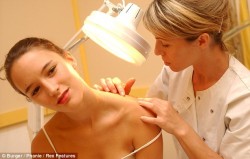
drastic increase in number of skin cancer patients
Malignant melanoma is less common but more fatal than other types of skin cancer. It is the cancer of the melanocyte cells that produce melanin which is responsible for the pigmentation of the skin. The U.K. Cancer Research has found out in a recent cancer related search analysis that malignant melanoma is no more uncommon. In fact, the chances of malignant melanoma has increased five folds more since the 1970s pushing it to 5th place in the list of the commonest cancers in the U.K.

There is an approximate 13,000 cases of this skin cancer compared to the 1,800 cases in 1975 in the U.K. The recently calculated incidence rate shows that 17 in 100,000 people get malignant melanoma compared to the 3 in 100,000 incidence during the 70s indicating a 47% increase in the chances of skin cancer in Great Britain. Approximately 2,000 people die of malignant melanoma in a year in the U.K!

Scientists and doctors are blaming the practice of deliberate tanning at the beaches that gives a skin damaging sunburn and exposes the major part of the skin to the harmful of the UVA and UVB rays. The skin cancer related search analysis has also claimed that the abundance of the ‘sunbed’ is responsible for the dramatic rise in the number of skin cancer cases. The research team suggests some simple steps to take if you want to avoid exposing yourself to this deadly disease and they are:

  • Cover up:
  • It is recommended that you keep the most of the skin covered in a light colored comfortable cotton fabric when the sun is strong. Most people tend to bare more to cope with the heat but the sun rays getting direct access to your skin does not really help you feel any less sultry while damaging your skin and inviting the harmful rays all at the same time.

  • Avoid the sun:
  • Of course you cannot sit in the comfort of your couch all summer just because it is so hot. You will have to go to school or college or to work but always remember to put on a light colored comfortable hat and big shades on the way. Plan all family or friends gatherings an hour after sun down.

  • Wear sunscreen:
  • Of course you do not need to be reminded to use the sunscreen 15 minutes before you leave the house during day time. But what you may not yet know is you need the sunscreen even indoors. The harmful rays can reach your room too. And make sure that you apply the sunscreen wherever the skin is exposed and not only on your face and neck. An effective sun block should have both UVA and UVB protection and a minimum of 30 SPF.

The cancer related search analysis also has a good news and that is, more people are surviving the disease now than earlier. Though there are more people being affected, only 2 out of 10 people get a fatal blow. The better news is, this rapid increase in the percentage can be controlled by simply staying away from the sun as long as possible.

EWS-WT1 oncoprotein activates neural reprogramming factor ASCL1 and promotes neural differentiation

The oncogenic fusion gene EWS-WT1 is the defining chromosomal translocation in desmoplastic small round cell tumors (DSRCT), a rare but aggressive soft tissue sarcoma with a high rate of mortality. EWS-WT1 functions as an aberrant transcription factor that drives tumorigenesis, but the mechanistic basis for its pathogenic activity is not well understood. To address this question, we created a transgenic mouse strain that permits physiologic expression of EWS-WT1 under the native murine Ews promoter. EWS-WT1 expression led to a dramatic induction of many neuronal genes in embryonic fibroblasts and primary DSRCT, most notably the neural reprogramming factor ASCL1. Mechanistic analyses demonstrated that EWS-WT1 directly bound the proximal promoter of ASCL1, activating its transcription through multiple WT1-responsive elements. Conversely, EWS-WT1 silencing in DSRCT cells reduced ASCL1 expression and cell viability. Notably, exposure of DSRCT cells to neuronal
induction media increased neural gene expression and induced neurite-like projections, both of which were abrogated by silencing EWS-WT1. Taken together, our findings reveal that EWS-WT1 can activate neural gene expression and direct partial neural differentiation via ASCL1, suggesting agents that promote neural differentiation might offer a novel therapeutic approach to treat DSRCT.

Selective and potent Akt inhibition triggers anti-myeloma activities and enhances fatal endoplasmic reticulum stress induced by proteasome inhibition

The PI3K/Akt pathway plays a crucial role in the pathogenesis of multiple myeloma (MM) in the bone marrow (BM) milieu. However, efficacy of selective and potent Akt inhibition has not yet been fully elucidated. In this study, we therefore examined the biologic impact of selective and potent Akt inhibition by a novel allosteric inhibitor TAS-117. TAS-117 induced significant growth inhibition, associated with downregulation of phosphorylated Akt (p-Akt), selectively in MM cell lines with high baseline p-Akt. Cytotoxicity of TAS-117 was also observed in patients MM cells, but not in normal peripheral blood mononuclear cells. Importantly, TAS-117 induced significant cytotoxicity in MM cells even in the presence of BM stromal cells, associated with inhibition of IL-6 secretion. Oral administration of TAS-117 significantly inhibited human MM cell growth in murine xenograft models. TAS-117 triggered apoptosis and autophagy, as well as induction of endoplasmic reticulum (ER) stress response with minimal expression of CHOP, a fatal ER-stress marker. Importantly, TAS-117 enhanced bortezomib-induced cytotoxicity, associated with increased CHOP and PARP cleavage and blockade of bortezomib-induced p-Akt, suggesting that TAS-117 augments bortezomib-induced ER stress and apoptotic signaling. Carfilzomib-induced cytotoxicity was similarly enhanced by TAS-117. Importantly, TAS-117 enhanced bortezomib-induced cytotoxicity in vivo, associated with prolonged host survival. Our results show that selective and potent Akt inhibition by TAS-117 triggers anti-MM activities in vitro and in vivo, as well as enhances cytotoxicity of proteasome inhibition, providing the preclinical framework for clinical evaluation of selective Akt inhibitors, alone and in combination with proteasome inhibitors in MM.