Cancer patients will be healthier with Molecularly Targeted Therapy

molecular
The general treatment of cancer incorporates poisoning the uncontrollably growing cells to kill them or at least stop or slow down the process of their multiplication. The problem is most of these procedures harm not on the target cells but also the healthy non-cancerous cells around it. The combined effect of the cancerous cells and the damage of the healthy cells makes the patient thinner and weaker every day. But according to the latest cancer related news this problem will soon become history when the ‘molecularly targeted therapy’ comes into effect.

Design
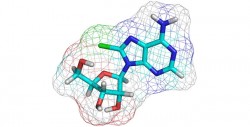
The drug is designed according to the human cell molecules so that they can be specifically directed at the target cells instead of target areas that have the cancerous cells in focus along with a radius of healthy cells around. The molecular structures will be developed such that one drug will affect only one type of cancer cell so that the effect is more focused than bombarded on the whole area of the body.

The life-saving model drug
The cancer related news has revealed the first drug modeled for the molecularly targeted therapy is ST1571, also known as Glivec. It has proved to cure the chronic myeloid leukemia (CML), a very rare type of leukemia. Around 7,000 Americans are diagnosed with this rare leukemia every year and the invention of this drug is expected to make this disease even rarer and eventually help the planet be free from this horrible disease.

Doctor are treating this drug as a pathway to invent similar drugs for various kinds of cancer cells. The President of the American Society of Clinical Oncology has confirmed the truth of the existence of this drug and is hopeful that this is going to be a major breakthrough in the history of the treatment of cancer.

People behind the drug
The drug is being developed under the reliable brand name of Novartis Pharmaceuticals under the direction of Doctor Brian Druker, director of Portland University’s Leukemia Program at the Oregon Institute of Health Sciences. His aim is to target only the cancer cells and destroy them effectively with a non-toxic therapy. This cancer related news will also reveal to you how in 1993, Doctor Druker had observed the ST1571 working against gastro-intestinal stromal tumor or the GIST because of an enzyme similar to the target CML enzyme present in the GIST.

The focus is on the identification of the critical abnormalities in each type of cancer so that a molecularly targeted drug like the ST1571 can be invented for all types of cancer. When this becomes possible, cancer will no more be recognized as a fatal disease. It will become for the future generations what the plague and tuberculosis are for us.

It is essential to identify the critical abnormality and the unique enzyme in the cancer cells because the molecular target drugs are developed on a backward principle where the drug is created specifically for the target enzyme with a limited spectrum of use to ensure that it will be non-toxic and harmless for the surrounding cells.
Positivity and Hope at the Abramson Cancer Center #CSD14

Cancer Survivor’s Day is a day to celebrate life with and after cancer. Every person diagnosed with cancer is considered a survivor, and today, we share inspirational stories of Penn’s Abramson Cancer Center survivors.

“Not a day goes by that I am not thankful for the incredible care that I received.”

Dimitrios Donavos of Silver Spring, MD was diagnosed with papillary carcinoma in May of 2006. Today, he is grateful to be cancer free.

“Sitting in Dr. Mandel’s office awaiting the results of a thin needle biopsy was one of the longest waits I ever had to endure. It was probably less than 20 minutes, all told, but the anticipation of confirming (or rejecting) a cancer diagnosis had the effect of making time stand still. The tension in the room as we waited for the results was palpable. When Dr. Mandel mercifully burst in and broke the silence, the news was what I had feared: I had thyroid cancer.”

Read Dimitrios’s full story here.

“There are always options at Penn.”

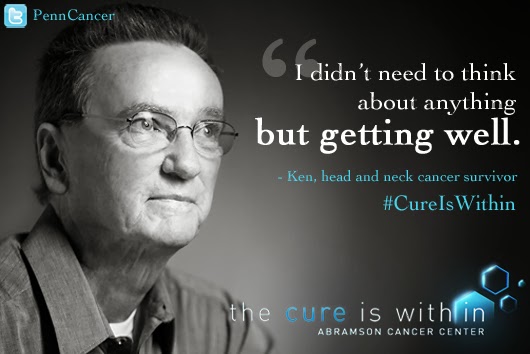
Ken Shaw could no longer ignore the swollen gland on the side of his neck. At first, he just brushed it off as part of a cold or sore throat, but as weeks went by and it wasn’t getting better, he decided to have it checked out by his family physician in Woodbury, NJ.

“I had stage 4 cancer, and needed a complicated surgery that involved a graft from my thigh in order to rebuild the back of my throat, but Dr. Weinstein removed the cancer that January, and I started radiation and chemotherapy after that,” remembers Ken. “I really had no time to react to the fact I had cancer because it all moved so fast.”

Read Ken’s full story here.

“By being grateful for the beautiful moments in each day, we are truly living.”

Rachel Kachnycz is a young woman from Ambler who, at 23, was diagnosed with brain cancer (grade III anaplastic astrocytoma). Today, she is cancer-free and living her life full of positivity.

“Though this diagnosis came to me as a shock, I think that in life we get that for which we ask. I needed something to make me put my silly anxieties and my entire life into perspective. I needed to truly appreciate the opportunity that I have here on this earth. Now I can say that I do.”

Read Rachel’s full story here.

An introductory guide to the FAQ’s about Chemotherapy

Chemotherapy
Chemotherapy is by far the most commonly used treatment procedure for cancer. It is used to cure cancer and also to palliate the symptoms and pain in a patient who cannot be cured of cancer. Some cytotoxic and anti-neoplastic drugs are used as the chemotherapeutic agents are incorporated in chemotherapy. The therapy can go hand in hand with other forms of treatment like radiation therapy (chemo-radiotherapy), with the exposure to light (photo-chemotherapy) and surgery.

History
The term ‘chemotherapy’ was initially referred to as the treatment of non-oncological procedures including the antibiotics or antibacterial chemotherapy. The broad definition of the word is “therapy using chemical substances especially in the treatment of cancer”. However, the uses of a chemotherapeutic drug is not limited to the treatment of cancer. The first ever modern-age chemotherapeutic agent was called arsphenamine. It is a compound of arsenic discovered in 1909 and was then used in the treatment of a Sexually Transmitted Disease called syphilis. The first use of a chemotherapeutic agent was an accidental discovery in the 20th Century during the World War. The mustard gas used in warfare was found to contain a potential suppressant of blood production.

Use in the treatment of cancer
There are two ways in which chemotherapeutic treatment can be given:

  • Single-agent: With just one therapeutic drug at a time.
  • Poly-chemotherapy: With a combination of different chemotherapeutic agents.

Uses apart from treatment of cancer
There are some chemotherapeutic agents that can be used in the treatment of other ailments as well including:

  • Spondylitis: Inflammation of parts of the vertebrae
  • Crohn Syndrome: A type of inflammatory bowel disease.
  • Psoriasis: A chronic skin disease.
  • Psoriatic arthritis: Arthritis that stems up from Psoriasis.
  • Rheumatoid arthritis: Inflammation of joints resulting in pain and sometimes, loss of mobility.
  • Scleroderma: Another skin disease.
  • Multiple Sclerosis: inflammation causing brain and nervous damage.
  • Systemic lupus: An autoimmune disease damaging the immune system along with the heart, kidney, liver, lungs, blood vessels and the entire nervous system.

Side-effects
The conventional therapy incorporates the act of damaging the uncontrollably growing cancerous cells. It also damages or stops the abnormal growth of cells that are non-carcinogenic. For example, abnormal cell growth in the digestive tract, bone marrow and the hair follicles.

There are quite a few side-effects of chemotherapy including:

  • Myelosuppression: Also known as bone marrow suppression, it is an abnormal decrease in the production of cells that produce leukocytes(for immunity) and erythrocytes(for carrying oxygen in the blood)
  • Immunosuppression: The decrease in the efficiency of the immune system at large.
  • Alopecia: The medical term for abnormal hair loss issues.
  • Mucositis: Inflammation of the mucous membrane in the digestive tract.

The search is on for non-toxic chemotherapeutic agents that will damage only the target cells and keep the healthy cells unharmed. This is going to be a major breakthrough in the history of Oncology. Once the non-toxic therapeutic agents are invented (one has already been invented and others are expected to follow suit) and distributed in the market, cancer patients will be free from all the side effects of chemotherapy.

MKK4 and MKK7 Act as Tumor Suppressors in Pancreatic Cancer

The c-Jun N-terminal protein kinase (JNK) and its two direct activators, namely the mitogen-activated protein kinase (MAPK) kinase 4 (MKK4) and MKK7, constitute a signaling node frequently mutated in human pancreatic ductal adenocarcinoma (PDAC). Here we demonstrate the cooperative interaction of endogenous expression of KrasG12D with loss-of-function mutations in mkk4 or both, mkk4 and mkk7 genes in the pancreas. More specifically, impaired JNK signaling in a subpopulation of Pdx1-expressing cells dramatically accelerated the appearance of KrasG12D-induced acinar-to-ductal metaplasia and pancreatic intraepithelial neoplasias, which rapidly progressed to invasive PDAC within 10 weeks of age. Furthermore, inactivation of mkk4/mkk7 compromised acinar regeneration following acute inflammatory stress by locking damaged exocrine cells in a permanently de-differentiated state. Therefore, we propose that JNK signaling exerts its tumor suppressive function in the pancreas by antagonizing the metaplastic conversion of acinar cells toward a ductal fate capable of responding to oncogenic stimulation. Cancer Res; 74(12); 1–13. ©2014 AACR.

BRAF Inhibitor-Induced Antitumor Immunity

B-RafV600E inhibitors have been suggested to promote tumor regression with the help of host immunity, but this hypothesis has not been examined directly in detail. In this study, we profiled immunologic changes in the tumor microenvironment and tumor-infiltrating lymphocytes (TIL) in a B-RafV600E/Pten-driven murine model of melanoma after administration of the B-RafV600E small molecule inhibitor PLX4720. In this model, we found that as tumors developed, they gradually acquired immunosuppressive features, including accumulation of regulatory T cells (Treg) and CD11b+/Gr-1+ myeloid cells and loss of Th1 effector functions on CD4+ TILs, such as CD40L and IFNγ expression. PLX4720 administration promoted development of a more immune stimulatory microenvironment associated with a relative increase in CD40L and IFNγ expression on intratumoral CD4+ TILs and a reduced accumulation of Tregs and CD11b+/Gr-1+ myeloid cells. Strikingly, CD40L or IFNγ blockade compromised the ability of PLX4720 to inhibit melanoma growth. Supporting this result, agonistic CD40 antibody was sufficient to evoke antitumor immunity and suppress tumor growth in tumor-bearing mice. Taken together, our results establish the critical role of immune-related changes, with key contributions for CD40L and IFNγ signaling in the antitumor responses triggered in vivo by B-RafV600E inhibitors. Cancer Res; 74(12); 1–13. ©2014 AACR.