
Adenosine A2A receptor (A2AR) blockade enhances innate and adaptive immune responses. However, mouse genetic studies have shown that A2AR deletion does not inhibit the growth of all tumor types. In the current study, we showed that growth rates for ectopic melanoma and bladder tumors are increased in Adora2a-/- mice within two weeks of tumor inoculation. A2AR deletion in the host reduced numbers of CD8+ T cells and effector-memory differentiation of all T cells. To examine intrinsic functions in T cells, we generated mice harboring a T cell-specific deletion of A2AR. In this host strain, tumor-bearing mice displayed increased growth of ectopic melanomas, decreased numbers of tumor-associated T cells, reduced effector-memory differentiation and reduced anti-apoptotic IL-7Rα (CD127) expression on antigen-experienced cells. Intratumoral pharmacological blockade similarly reduced CD8+ T cell density within tumors in wild-type hosts. We found that A2AR-proficient CD8+ T cells specific for melanoma cells displayed a relative survival advantage in tumors. Thus, abrogating A2AR signaling appeared to reduce IL-7R expression, survival and differentiation of T cells in the tumor microenvironment. One implication of these results is that the anti-tumor effects of A2AR blockade that can be mediated by activation of cytotoxic T cells may be overcome in some tumor microenvironments as a result of impaired T cell maintenance and effector/memory differentiation. Thus, our findings imply that the efficacious application of A2AR inhibitors for cancer immunotherapy may require careful dose optimization to prevent activation-induced T cell death in tumors.
My Epic Ride for the Abramson Cancer Center: Abramson Cancer Center Director Chi Van Dang, MD, PhD shares his journey
On October 11th, hundreds of cyclists and their families geared up at a very cold and rainy starting line for the Structure Tone Ride to Conquer Cancer. The ride took cyclists on a 2-day, nearly 150 mile journey through the hills of the Philadelphia suburbs, and raised nearly $2 million for cancer research at the Abramson Cancer Center.
In this post, Abramson Cancer Center Director Chi Van Dang, MD, PhD, shares his experience on the ride.
On My Ride
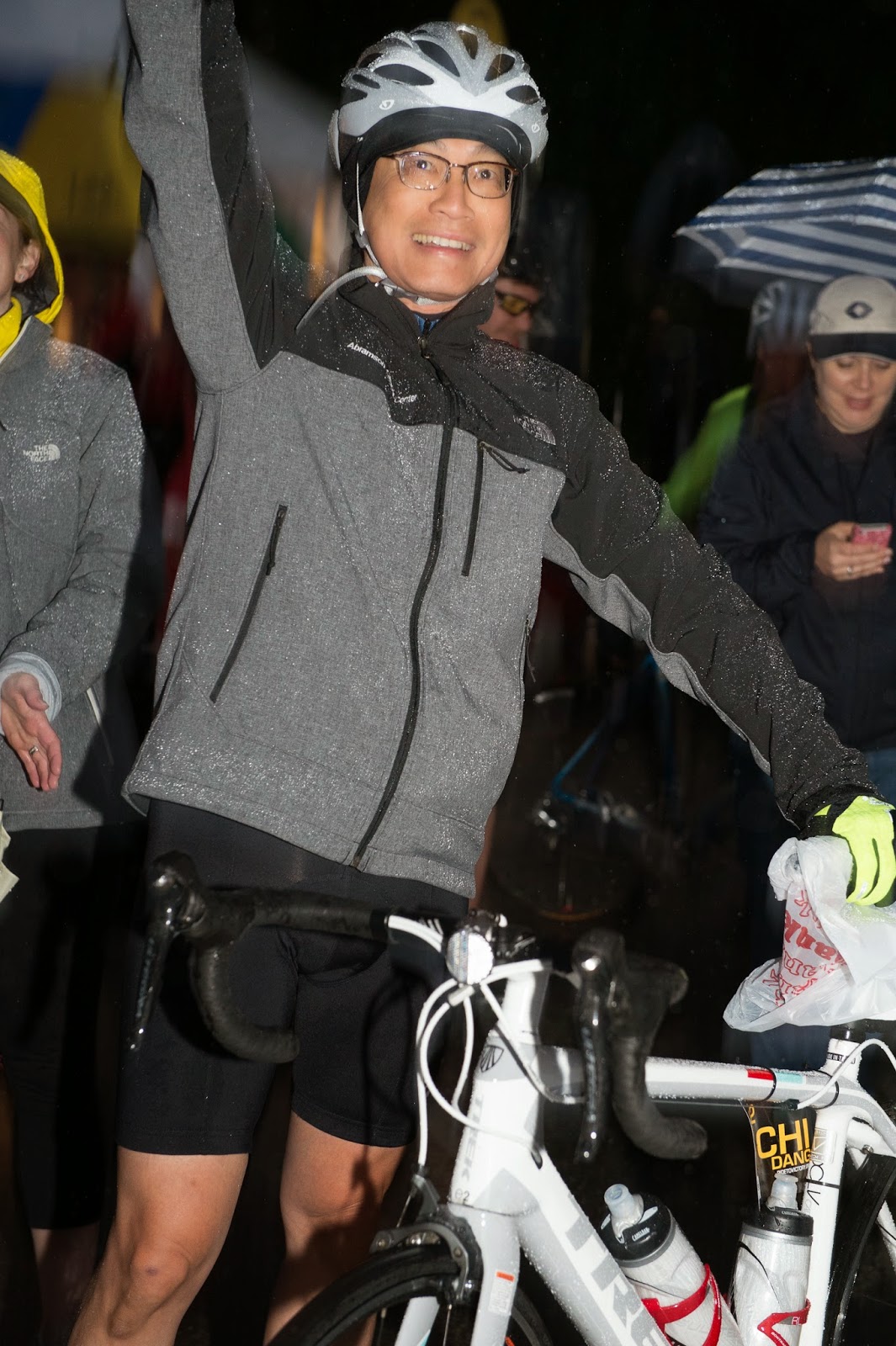
I completed the Ride through 150 miles of beautiful Pennsylvania countryside that included some very intense hills. The first day started at 7:30 am with pouring rain—and for a brief moment, sharp pings of sleet beat down on my face. Despite the cold temperatures and pouring rain, over 500 riders came out to support the cause.
I thought of my father and brother Bob, who were both taken away by cancer, as I started and then throughout the Ride.
During the first day, I had a near-miss on the road. As my group was cycling up a hill in the pouring rain turning left in single file, a car going too fast from the other side appeared in my left visual field. At that moment I realized that it was out of control, skidding into our side of the road directly toward me. I quickly ditched to the right and onto the roadside ground; her car slid right up over my front bike tire and slightly bent it. A slightly bent tire and only a minor left leg scratch evidenced the near-miss. At the next pit stop about 2 miles ahead, my bike was tuned, my scratch cleaned, I warmed up, and then got back onto the road towards camp. I know it was my Dad and brother Bob who looked out for me.
During the evening of the first day at camp— I shared that I have a personal reason to ride other than leading the Abramson Cancer Center. There were many cancer survivors who also rode, and when I asked all those who have been touched by cancer to stand, every single person in the pavilion stood. I told everyone to look around for a moment and to take this moment in—it was a beautiful reminder of the reason we were all riding. The evening ended with a band and people dancing, celebrating life and fellowship; needless to say there was plenty of food and drinks.
The next day started at camp about 60 miles north of Philadelphia at 37 degrees Fahrenheit, and the sun was rising up to provide the much needed warmth for the rest of the day. After a few significant hills, the sun blessed the beautiful Pennsylvania farmland, which is beginning to show the multitude of colors of the fall and goldening of the crops. The leaves are starting to end their annual journey in beautiful autumn colors, bright red, yellow, and brown. Farmhouses of all kinds with tall corn silos rose out into view. After a lunch pit stop and 25 miles left, the sky was blue and the sun was fully out for the rest of the day.
 When we came into Philadelphia there were several challenging hills, but the end was in sight. There were people cheering along the ride as well as cheering us into the finish line. Mary, my wife, was there with a big smile, and gave me a much needed hug after being 7 hours on the road.
It was moving to see the cancer survivors completing their ride with joy and pride. The families were there to greet them with smiles and tears; we stayed and cheered until the last rider came in at about 5:30 pm. The sun set and the ride was over, but the incredible weekend is a testament to the strength, courage, and dedication felt within our community that will never be forgotten.
With gratitude,
Chi V. Dang, MD, PhD
Director, Abramson Cancer Center
Please share your experience, and email your rider story to [email protected].
Focus on Cancer RSS Feed 2014-10-23 10:00:00
On October 11th, hundreds of cyclists and their families geared up at a very cold and rainy starting line for the Structure Tone Ride to Conquer Cancer. The ride took cyclists on a 2-day, nearly 150 mile journey through the hills of the Philadelphia suburbs, and raised nearly $2 million for cancer research at the Abramson Cancer Center.
In this post, Abramson Cancer Center Director Chi Van Dang, MD, PhD, shares his experience on the ride.
On My Ride

I completed the Ride through 150 miles of beautiful Pennsylvania countryside that included some very intense hills. The first day started at 7:30 am with pouring rain—and for a brief moment, sharp pings of sleet beat down on my face. Despite the cold temperatures and pouring rain, over 500 riders came out to support the cause.
I thought of my father and brother Bob, who were both taken away by cancer, as I started and then throughout the Ride.
During the first day, I had a near-miss on the road. As my group was cycling up a hill in the pouring rain turning left in single file, a car going too fast from the other side appeared in my left visual field. At that moment I realized that it was out of control, skidding into our side of the road directly toward me. I quickly ditched to the right and onto the roadside ground; her car slid right up over my front bike tire and slightly bent it. A slightly bent tire and only a minor left leg scratch evidenced the near-miss. At the next pit stop about 2 miles ahead, my bike was tuned, my scratch cleaned, I warmed up, and then got back onto the road towards camp. I know it was my Dad and brother Bob who looked out for me.
During the evening of the first day at camp— I shared that I have a personal reason to ride other than leading the Abramson Cancer Center. There were many cancer survivors who also rode, and when I asked all those who have been touched by cancer to stand, every single person in the pavilion stood. I told everyone to look around for a moment and to take this moment in—it was a beautiful reminder of the reason we were all riding. The evening ended with a band and people dancing, celebrating life and fellowship; needless to say there was plenty of food and drinks.
The next day started at camp about 60 miles north of Philadelphia at 37 degrees Fahrenheit, and the sun was rising up to provide the much needed warmth for the rest of the day. After a few significant hills, the sun blessed the beautiful Pennsylvania farmland, which is beginning to show the multitude of colors of the fall and goldening of the crops. The leaves are starting to end their annual journey in beautiful autumn colors, bright red, yellow, and brown. Farmhouses of all kinds with tall corn silos rose out into view. After a lunch pit stop and 25 miles left, the sky was blue and the sun was fully out for the rest of the day.

It was moving to see the cancer survivors completing their ride with joy and pride. The families were there to greet them with smiles and tears; we stayed and cheered until the last rider came in at about 5:30 pm. The sun set and the ride was over, but the incredible weekend is a testament to the strength, courage, and dedication felt within our community that will never be forgotten.
With gratitude,
Chi V. Dang, MD, PhD
Director, Abramson Cancer Center
Please share your experience, and email your rider story to [email protected].
Spontaneous Lung Metastases Lose Malignancy
Patient-derived human-in-mouse xenograft models of breast cancer (PDX models) that exhibit spontaneous lung metastases offer a potentially powerful model of cancer metastasis. In this study, we evaluated the malignant character of lung micrometastases that emerge in such models after orthotopic implantation of human breast tumor cells into the mouse mammary fat pad. Interestingly, relative to the parental primary breast tumors, the lung metastasis (met)–derived mammary tumors exhibited a slower growth rate and a reduced metastatic potential with a more differentiated epithelial status. Epigenetic correlates were determined by gene array analyses. Lung met–derived tumors displayed differential expression of negative regulators of cell proliferation and metabolism and positive regulators of mammary epithelial differentiation. Clinically, this signature correlated with breast tumor subtypes. We identified hsa-miR-138 (miR-138) as a novel regulator of invasion and epithelial–mesenchymal transition in breast cancer cells, acting by directly targeting the polycomb epigenetic regulator EZH2. Mechanistic investigations showed that GATA3 transcriptionally controlled miR-138 levels in lung metastases. Notably, the miR-138 activity signature served as a novel independent prognostic marker for patient survival beyond traditional pathologic variables, intrinsic subtypes, or a proliferation gene signature. Our results highlight the loss of malignant character in some lung micrometastatic lesions and the epigenetic regulation of this phenotype. Cancer Res; 74(24); 1–12. ©2014 AACR.
Acquired differentiation and loss of malignancy of spontaneous pulmonary metastases in human-in-mouse breast cancer models
Patient-derived human-in-mouse breast tumor xenograft models with spontaneous lung metastases have emerged as powerful, representative systems of cancer metastasis. To evaluate the malignancy of lung micro-metastases, we implanted pulmonary metastatic cells into mouse mammary fat pads. Compared to the parental breast tumors, the lung met-derived mammary tumors showed a slower growth rate and a reduced metastatic potential with a more differentiated epithelial status. Combined microRNA and gene array analyses characterized the acquired epigenetic features. The lung met-derived model displayed differential expression profiles of a few hundred genes and microRNAs, including negative regulators of cell proliferation and metabolism, promoters of mammary epithelial differentiation, and unknown regulators. The lung-met-derived gene signature correlated with clinical breast tumor subtypes. Subsequently, we identified microRNA-138 as a novel regulator of breast cancer cell invasion and EMT by directly targeting EZH2, a polycomb epigenetic regulator. GATA3 transcriptionally regulates miR-138 levels in the lung metastases. The miR-138 activity signature defined from the microarray gene expression analyses serves as a novel independent prognostic marker for breast cancer survival beyond the classical pathological variables (tumor size, nodal status, grade, age, and systemic treatment), intrinsic subtypes, and a proliferation gene signature. Our results highlight the loss of malignancy of some lung micro-metastatic lesions and the epigenetic regulation of this phenotype.


